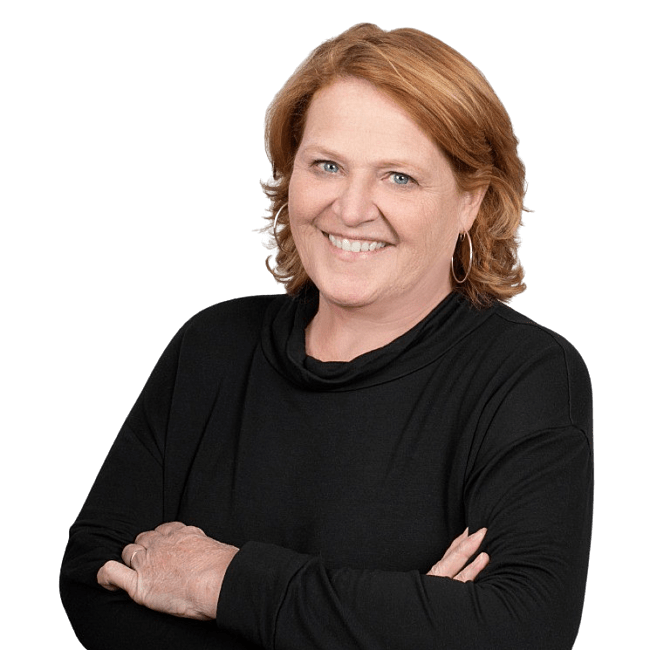
An intimate interview with the Institute of Politics Director Senator Heidi Heitkamp, one week after the election.
In December 2016, Senator Heidi Heitkamp was seen as a potential Cabinet pick for Donald Trump’s administration. As the first woman elected to the U.S Senate from North Dakota and founder of the One Country Project, she serves for the people of rural America and proudly has an A-rating from the National Rifle Association (NRA) for her consistent support of pro-gun legislation. It was no surprise when Trump gave her a rare, warm welcome on Air Force One.
This year her party suffered a crushing defeat. Americans across the nation rejected Vice President Kamala Harris as she lost to Donald Trump in the presidential election. Republicans took back control of the Senate and the House– the GOP trifecta. Trump is delivering a message that resonates with the people, while states across the country, both urban and rural, are turning red.
Senator Heidi Heitkamp sat down with me at the Institute of Politics exactly one week after the election to discuss the Democratic party’s defeat. The path forward for the Democratic Party appears unstable and uncertain as politicians assess what went wrong. However, Senator Heitkamp sees this as an opportunity for the party to reflect on its foundational principles and reconnect with the core voters it has lost.
You described yourself throughout your campaigns and your time as Senator for North Dakota mostly as a centrist Democrat. What does that mean now?
My political culture was forged post-World War II into Vietnam. But fundamentally, the Democratic Party had been defined up until probably Lyndon Johnson, by the New Deal. So I came out of that tradition of New DealDemocrats– which was when people are down and out you give them a hand up, but you also respect hard work, you respect working people. I think that there’s been a corner turned for the Democratic Party that I don’t think they intended to turn away from the working people, but I think it’s now an opportunity to recalibrate that. And so if you said, how would I define myself? I always tell people I’m a New Deal Democrat. Which you can say, Is that moderate? Is it liberal? Certainly, when FDR proposed social security, that was radical. Now, we don’t even think about it as radical. We fight about who’s going to be better able to protect it. When Truman pushed through and eventually got, not during his administration, Medicare, that was novel. He adamantly fought Medicare. There’s no one saying we’re going to get rid of Medicare today. So, a lot of these ideas that are good New Deal ideas, good working class Democratic ideas, things like Obamacare, they come out of our party, but there is always a period of adjustment for the public to recognize them, and by the time they recognize them, The Republican Party is taking credit. And so I always say I’m a New Deal Democrat.
So as a New Deal Democrat, how do you feel about this loss of the Democratic Party as a whole?
I’ve gotten myself in a little bit of trouble because I think that it is an opportunity for the Democratic Party to look in the mirror and say, why is it that the party of working people can’t get working people to vote for it? So to me, this has been a trajectory that’s been a long time coming. We basically kind of delayed the reckoning by post-pandemic, with Joe Biden getting elected, but it has been increasingly difficult for Democrats to get elected for probably the last 15 years.
You used the word reckoning, so I assume you would say the Democratic Party is in a very vulnerable position right now. The party lost the presidency, the Senate and the Republican party may keep the House. Could you discuss more on how the Democratic Party situated themselves here.
I think by, and I’m going to borrow a phrase from someone who said this, by looking at working people as if they were missionaries and not neighbors. And I stole that line, but I thought it was just such an excellent way to express the way I’m feeling. That we’re [the Democratic Party] going to help you, as opposed to listening and then responding. I also think there was no small amount of people not seeing women as strong enough to lead, no small amount of ads that were run on transgender issues. So, where the wedge could be driven on cultural issues, it was driven.
There is a larger conversation of the Democratic Party becoming too driven on identity politics and less driven on policy politics. How do you feel about this?
I don’t know that that’s true, and I don’t know that it’s fair. Because we are more diverse, because we have a bigger tent, that doesn’t mean that we’re engaged in identity politics. It just means that, when you look at Democrats, that Democrats are going to look more diverse. So I’m a little careful when using “identity politics.” Now, to the extent that people felt like a conscious decision to advance left them behind– I think that’s problematic. So, I think the sense that everybody has a chance to share in that opportunity of advancement in America is critical to the Democrats. But, that doesn’t mean that we should give up our concern for what advances this country in the direction of equality. I’m really concerned about how people are talking about identity politics, because in some ways, it’s a shortcut to, let’s just go back to not worrying about whether everybody has a seat at the table. Having spent time here at the University of Chicago, I think most students would think that that is not a path forward for the Democratic Party.
Yes, on the topic of being left behind, we saw in the election that the demographic that most felt like they were most left behind was young males, and focusing on Chicago the city has its biggest GOP bump since 1992 winning about 22% of the city’s vote. This has brought mixed feelings in City Hall. Would you say the Democratic Party in the state is becoming weakened because of young males?
I don’t know. I want to talk about young men being left behind. This is not new. Back in 2015, I was given a chance to talk to a group of women about what I thought should be advanced as issues that we’re concerned about and I said, if you look at the education attainment trajectory, male and female, this is not good. Women are overwhelmingly doing better and advancing in advanced careers, advanced degrees in college than young men. Young men are struggling in secondary schools, and that’s something we should be talking about. What is it about teaching methods that are leaving young men behind? Because if those numbers were reversed, and it were women, young women, who only a third of the college population were going to be young women, we would be concerned about that. So, there are real issues as it relates to what is happening in America, regardless of race, as you said, with the gender disparity. It is leading to a huge gender gap that needs to be analyzed and reviewed. As with any kind of thing like this, the pendulum can swing too far, which is what you’re seeing now in statements like “your body, my choice.” Really? I mean, that brings it way over here to misogynistic territory, and ignores that there is a fundamental realignment of education attainment, realignment of opportunity for young men in this country that needs to be addressed just like we would want to address it if those numbers were reversed. Now, I don’t know enough about Chicago politics to know, but I think that there is a reaction to the despair that young people are feeling. Young men in particular are feeling, and you see it in the kind of gravitation to these more muscular messages that may not reflect where we want to go as a country such as “your body, my choice.” I mean, what does that mean?
You may not know much about Chicago politics, but I know you are the founder of One Country Projects. So bringing that same idea of the disparities between men and women in Chicago can you expand it to Midwestern politics in North Dakota where you have had more experience in? How have you seen it play out there?
What we’re talking about is bridging the divide, the political divides in this country. One Country addresses the concerns about rural America feeling disaffected and not respected. So, what I would say is the commonality of all this is when people feel disrespected, they will have a reaction. I think that rural people, young men, felt disrespected by the Democratic Party because the message frequently from the Democratic Party is too paternalistic.
Do you feel that those were their [young men’s] main concerns with Harris’s policies?
It’s kind of like, how do I feel today, and will this be a change for me? Part of this is bandwagon stuff too. You know we’re going to teach you not to take us for granted and I think that’s definitely true for young African Americans, but I’m not a young African American male. So to me where I can speak to is the attitudes and beliefs of rural America because that’s where I’m from. I don’t want to project any of my ideas, but my sense may be that this was people not being seen for who they are and what their challenges are.
The people ultimately just felt that Harris did not represent them which led to Trump winning both the popular and the electoral vote, rejecting Harris entirely. How do you analyze the final results of the Presidential Election?
I was asked whether this was a realignment, and I said, “No this isn’t a realignment.” I don’t think it’s a realignment, I think it is a reaction. The one thing that we haven’t talked about, that I don’t think we have a good analysis on, is what I would call the country having “long COVID.” I think to some extent, we haven’t recovered educationally from COVID. Where a lot of people have not recovered economically from COVID, they don’t have the same sense of security that they had prior to COVID. Because I will tell you, Donald Trump’s economy was nothing special. It was average at best, and I can show you all the numbers that would tell you that’s absolutely true. In some ways, Biden’s economy for people was better. For the most part, Trump got up every day and said he had the greatest economy in the history of the world, that was never true, but no one challenged it. In part because I think the Democratic Party is not very good at delivering a middle class economic message. So let’s just put it there. I think that he [Trump] represented a time that was prior to COVID, where you could go to a restaurant, where you sent your kids to school, where things seemed normal. Then Biden had two years post COVID to recover. Inflation hit, supply side hit. When you look at AI, it is going to cause a huge number of labor disruption challenges. Then you have the challenge at the border, creating more insecurity, and you had this sense that streets weren’t just safe, right? Some of that is post COVID as well. So I think that in the end, when political scientists analyze this, my anticipation will be the pre and post COVID has played a role here. In fact I saw someone who said that they studied the politics of post-Spanish flu, and saw that same kind of “strong-man autocracy” and so I’m anxious to see how that plays out.
Do you believe that COVID impacted the shift in voter turnout? Yeah, I do. I think that when Trump was in charge of COVID, and he said really crazy things, Joe Biden was able to basically come in and say, “time to turn the page, we aren’t doing well.” We had negative employment and things were not good when Biden was elected president, people made that choice. Biden for all the problems that Trump had, didn’t perform particularly well. At the end of the day, his majorities weren’t great. There was no real mandate for Joe Biden. Then you had inflation, supply chain disruption, and you had people feeling less secure in this country, partly because of the border, partly because of all of the attention to inner city and gun crime. I always tell people this, first impressions matter. That’s why I’m saying you have to buy a whole lot of goodwill from a bad impression. So the first impressions of the Biden administration were not good and the turning point, I would tell you, was the Afghan withdrawal. So if you plot out what was happening with Joe Biden’s favorability numbers that was the beginning. That’s the beginning of being upside down and he never recovered.
Do you think that Harris suffered being seen as an extension?
Yeah, absolutely. Then she failed to differentiate herself when she had a chance. That’s a tough deal because you don’t want to be phony, but by the same token, you know you have to own it. You’re the vice president. He’s your friend. He just gave you this wonderful opportunity.
When was her opportunity to differentiate herself?
On “The View.” I think from day one. She [Harris] thought that she could differentiate herself based on generational change and I don’t think that was going to work. The other thing that really affected her chance was Joe Biden should never have said she’s in charge of the border. You don’t give that job to someone you can’t fire, but I don’t know if she was there or if she had a chance to say no. So what people heard is that she was in charge of the border and they said, “Okay, you were in charge of the border, and it didn’t get fixed.”
Many Americans felt that Harris fell weak on voting issues, including the economy and immigration. Do you feel that the campaign should have proposed these policies sooner and stronger?
I mean she came out and was widely criticized, even by the Washington Post, for talking about groceries. By the time she was in it, it was awfully difficult to change people’s impression of what was going on in grocery stores and what was going on at the border. And she wasn’t in charge, so she ended up kind of taking the good with the bad. The good being an opportunity to run for president unopposed, the bad being you are going to be responsible for every one of those proposals. Now, what I assumed is that Joe Biden’s team had messaged and tested different ways to talk about these things that could have been translated by her, maybe a little differently. But you know at the end of the day that it was awfully hard to turn around the public’s impression of what happened during the Biden years. You can’t have those kinds of right track, wrong track numbers and enter a race thinking you’ve even got a chance. I tell you,she only had a chance because it was Donald Trump. I think any other Republican running would have done even better. People don’t like Donald Trump.
For you, what does another Trump administration mean?
One thing that I find amazing is when I hear people say, “Oh, he said that, but he won’t do it.” Like, what? He’s going to do exactly what he told you he’s going to do. He’s going to deport people who are in this country. I don’t know how he’s going to do that, because if you said, “I’m from Honduras,” is Honduras going to take people back? He’s going to pardon the January 6th defendants. These are insurrectionists that were allowed to commit a crime against every American by trying to overturn a valid election, but they will be pardoned. He will give up Ukraine, huge chunks of Ukraine, and force Zelinsky into negotiating because he’s not going to give him the equipment that he needs to acquit the war .He’s going to do exactly what he said he’s going to do. There won’t be a climate agenda. We won’t be a climate leader. There will be a systematic dismantling of public education, which no one’s talked about. Think about Title One. Low income, usually disadvantaged people speaking English as a second language. That money that comes from the federal government for Title One schools is absolutely essential to delivering education services in states. What happens to Title One? What happens to Head Start? What happens to help with daycare, what happens to health care? I mean, these are all questions that will have to be answered.
 Bridget Jinglei Ye Portfolio
Leave a comment